
A real estate agent gave Catherine Tintor one piece of advice when she moved from Adelaide to Sydney: try SECC.
She wanted a new social network in a new city. So, she walked in and started volunteering in the pantry.
Two years on, Catherine leads SECC’s playgroup program and toy library.
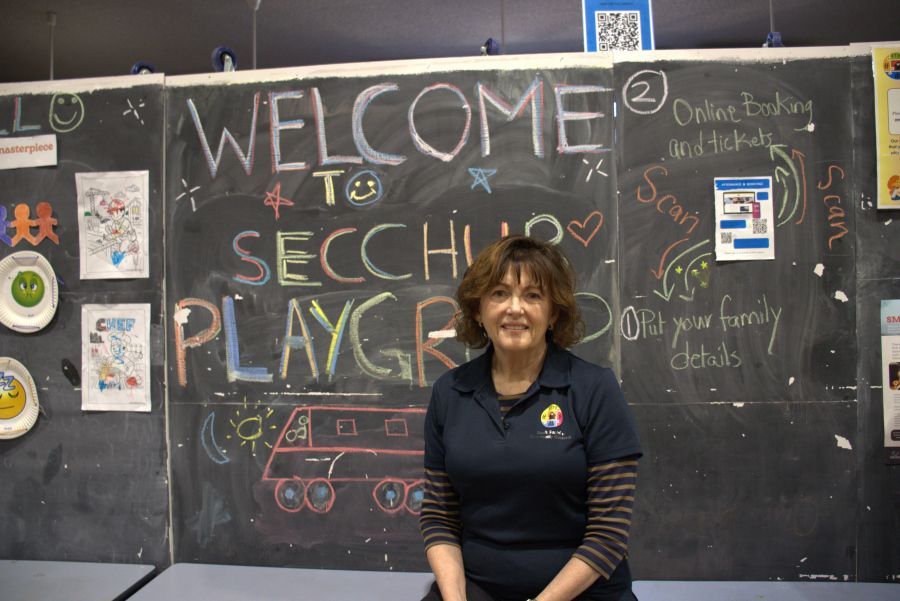
She’d spent her career in aged care and nursing. Playgroup gave her a look at the other end of the life spectrum – early childhood, and how it begins.
Every fortnight, the groups run across four days on a new theme, built around the PeepLTP (Peep Learning Together Programme).
In term three 2026, weeks one and two will focus on transport. Families take home a simple handout with tips on the fortnightly topic, to include in their everyday conversations with their children. Nothing overwhelming.
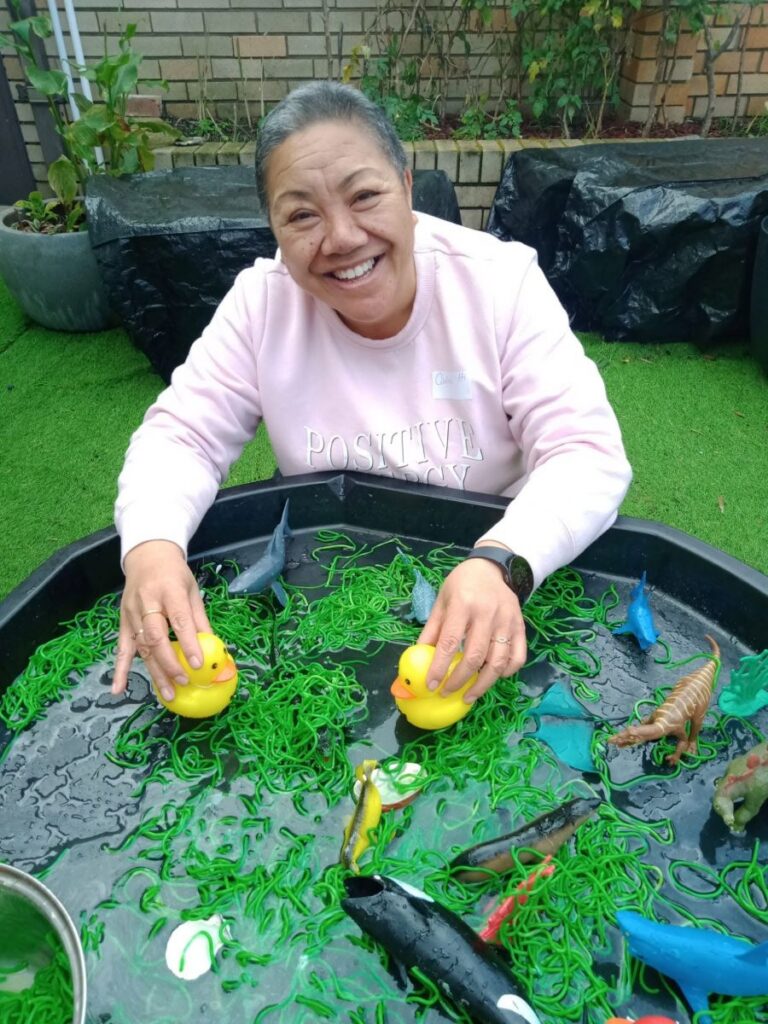
Our Supported Playgroups have a very multicultural group of participants and this year during Harmony Week, one book was read aloud in both English and Arabic, so every child could hear a story in another language. Carina (below), a volunteer, then sang to the children in Māori.
Numbers have nearly doubled since Catherine started. Almost 100 families now come through each week – more in summer.
An important part of the playgroup routine is helping the children to accommodate and participate in circle time at the end of each session.
“This is a very popular part of the session where we stop for a snack together and share stories and songs,” says Catherine.
“The session ends with the children coming up to get a stamp and sticker. However, we noticed that there was a lot of pushing, and a lack of thanks.”
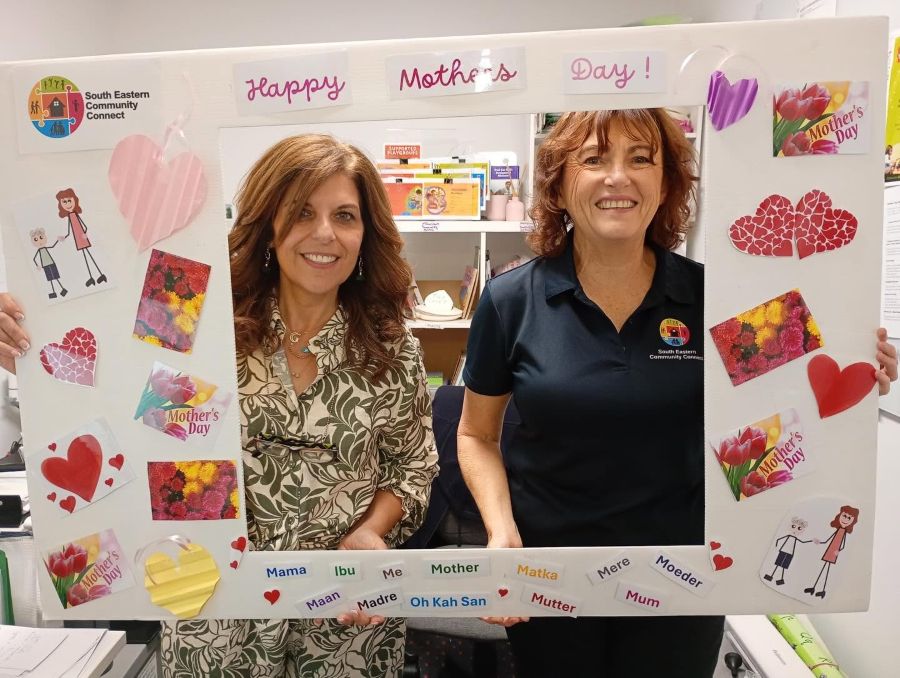
So she and her co-facilitator, Germaine Alber (below left), introduced a manners song, which included some simple Auslan signing. The children have embraced this, and now wait their turn and say thank you each week.
“It has been so lovely to watch them understand and follow this simple social rule,” she says.
“It’s not that they can’t. They just need to be shown.”
The group also supports children with developmental delays and additional needs. A speech pathologist, Raina Griffin, visits once a term, and several families have been referred to her for ongoing support. One boy with significant physical and developmental challenges attends with his dad, because at playgroup he can explore without judgement, pressure or routine.
For many parents, especially those without family nearby, playgroup becomes something bigger than a weekly session. Friendships start there and continue after, at the park, over coffee, and in multiple conversations sharing experience and knowledge around toilet training and sleep.
“A lot of the parents just come up to say ‘That was a really lovely session’,” Catherine says.
“That’s what gets me out of bed.”